
Sweeping generalizations about works of art are certainly unfair and a crude starting point for one’s assessment of them. I am, however, a strong admirer in storytelling where the exploration of a motif and the presentation of the story’s main thesis do not require the entire length of the tale to be conveyed. Indeed, the repetition of a central premise without wearing it down to a coarse stub of an idea is an example of methodical structuring of the plot and well-honed technique in progressing the story while sustaining the core message throughout it.
Taylor Sheridan’s 2016 film Hell or High Water is generally quite simple. Debt and the imminent loss of property have pushed two brothers into lawlessness, robbing banks to gather the necessary funds to save their ranch. Two Texas rangers are looking for the two brothers, adding another layer of difficulty in their illicit endeavours. While the premise of the film is quite straightforward and even perhaps somewhat anachronistic, the film being an admittedly well-executed nod to older Westerns, it manages to do the simple things quite well. This includes the previously mentioned repetition of its central thesis, including the way it handles the characterization of its protagonists.
An example of this comes in the form of the gas station scene, briefly preceded by 27 seconds of driving on the highway, roughly halfway through the film. Waylon Jennings’ 1973 song ‘You Ask Me To’ is playing on the radio. Ben Foster’ Tanner Howard starts singing along, shooting glances at his brother, Chris Pine’s Toby Howard, trying to cajole him into singing along with him. This very brief non-verbal, in a sense, interaction demonstrates two things. Tanner’s propensity and ability to push Toby into testing situations is the first one. The second thing is that despite Tanner’s general aggression and cynicism he still needs his brother’s affection and validation. The lyrics “let the world call me a fool, but if things are right with me and you, that’s all that matters” play in the background.
The two brothers reach the gas station, where the direction of photography truly shines. The geometrical placement of men, animals, vehicles and objects is very well-thought-out here. The car has been filled with gas and the camera has now settled on the viewpoint it will allow us for the next two or so minutes. To the right-hand side, a man in a Stetson hat with his horse. The car parked facing from the left to the right. Tanner dozing off, leaning against the driver’s seat. Toby is heading inside the gas station shop for a few beverages.
Whether accidental or not, Toby’s course splits the frame in two. The man and horse on the right, representing something more old-fashioned and serene. Tanner and the car on the left, something slightly more modern, mechanical, more hurried.
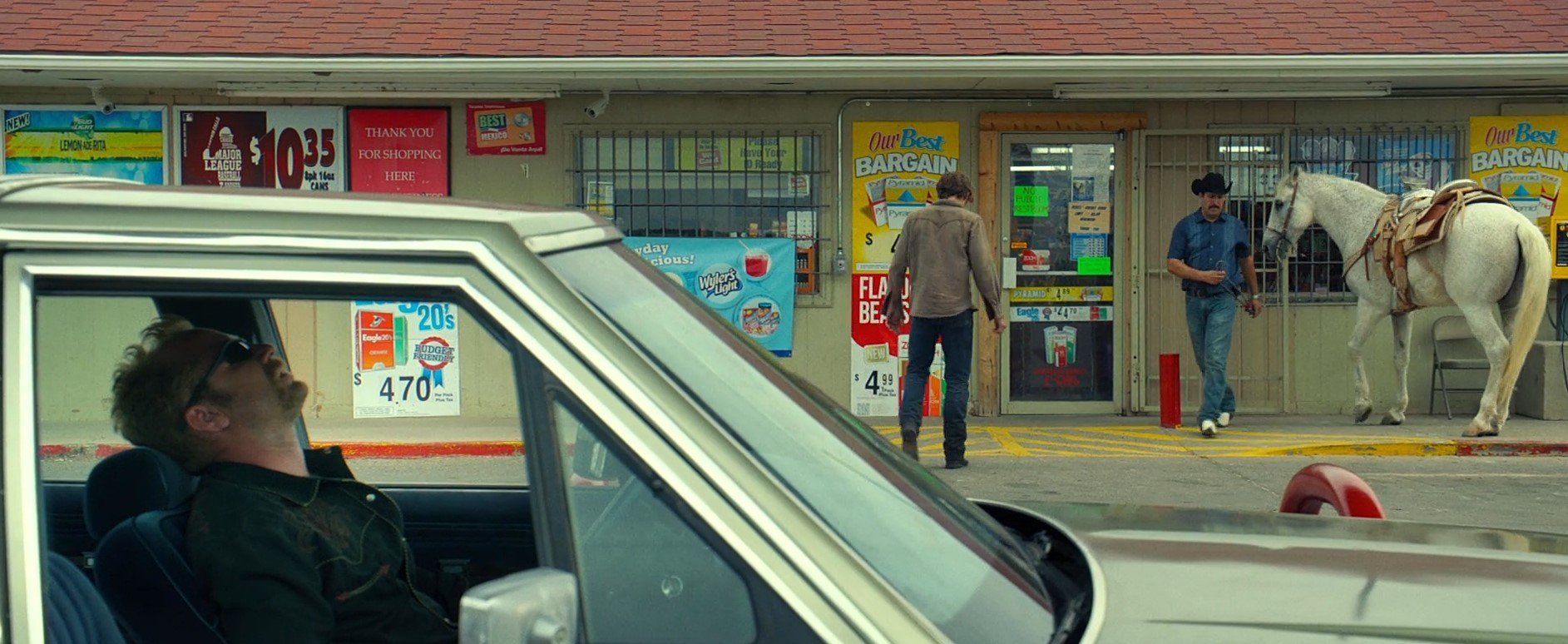
“Dr Pepper, Winston Lights”, Tanner says, denoting the gratifying but generally harmful items he wants his brother to get for him. The behatted man on the right gets on his horse and exits the scene just as an even newer car enters the frame from the right-hand side. The newly parked car is clearly quite new, perhaps only two or three years old. It’s expensive. It’s also bright, with its lime green metallic paint gleaming in the Oklahoma sun.
The visual brashness is matched by an auditory one. Metalcore band Attila is blaring out of the windows. The two cars visually intersect each other, literally clashing within the frame. Moreover, the two windshields form a vee shape, creating a composition of Tanner, authentic, old school, relaxed, versus the nameless, pretentious, modern poser.
Two young white men are inside the car. The driver, unprovoked, starts talking to the sleepy Tanner, who is inadvertently facing his way, trying to force an altercation. In the background, Toby exits the shop. Tanner reluctantly responds to the needlessly aggressive and loud young man. “Boy, you’d think there were ten of me”, Tanner says, denoting how overwhelmingly brutal he would be if the two got into a fight.
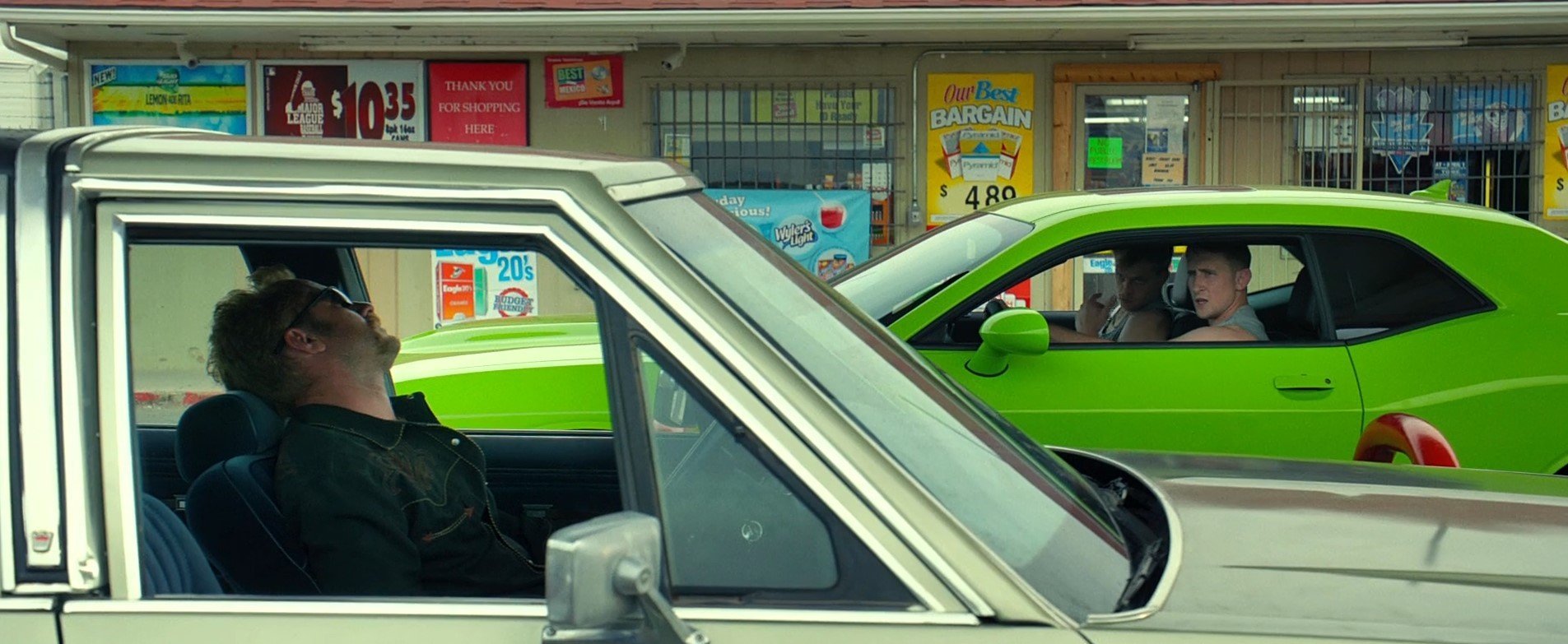
The young man escalates things further by flashing a pistol. Tanner seemingly refrains from reacting, but for a second we see his right hand moving ever so slightly, taking out his own gun from his waist. Tanner’s gun remains unseen but we know it’s there, just like Tanner’s own deleterious personality. The young man exits the car but as soon as he tries to stand up and move towards Tanner, Toby enters the frame from the right, smashing his head against the door and punching his face into a pulp.
The poser drops to the floor. Toby walks to the passenger seat but the other young man wants absolutely none of this and admits that his friend deserved this unrelenting punishment. This is in stark contrast with the unconditional loyalty between Tanner and Toby. Back your brother up first, question his motivations later. Toby picks the weapon from the ground and tosses it further away, ensuring no revenge shots while they drive away.
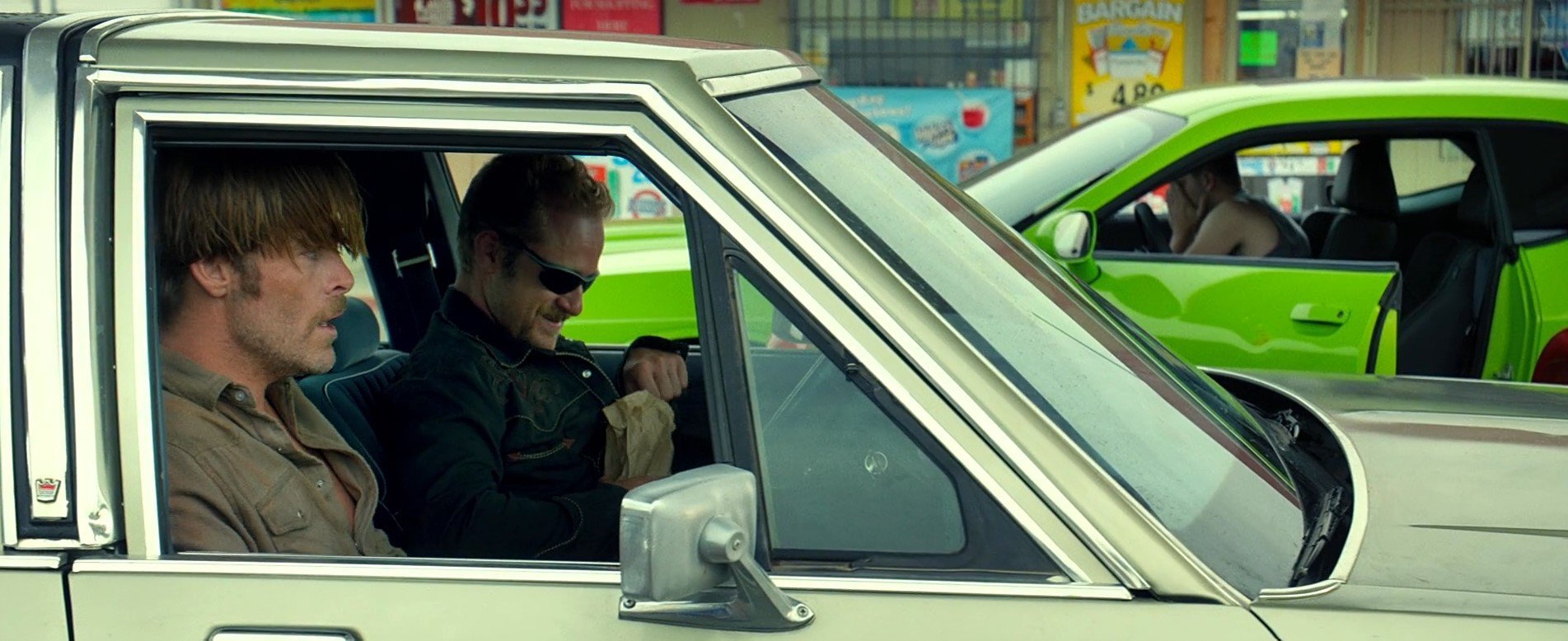
Tanner mockingly notes that Toby “remembered the gun”, laughing as he speaks, referencing an earlier scene in the film where Toby doesn’t discard a gun taken from someone else. Toby is dismissive but he has taken a lesson onboard indeed. Toby says Tanner could have gotten killed. “Not the way it would have gone, little brother”, Tanner says, confirming his readiness to retaliate with similar force, while also pointing to the rather hollow and contrived threats the young man was unleashing towards him.
“Ten of me! I told you!”, Tanner screams out the window. The two brothers drive away, with Tanner nonchalantly reverting to snarky remarks about the beverages Toby bought, as if a potentially lethal situation hadn’t just unfolded moments earlier. Toby plays along, like he always does, duty fulfilled, seriousness underlined, next task firmly on the agenda.

