
Urban festival raises concerns over the gentrification of old Nicosia
By Lizzy Ioannidou
The gentrification of old town Nicosia has seen cafes and bars mushroom and monopolise the few available public spaces with their outdoor tables and chairs.
The government, in cooperation with the Nicosia municipality, also has bigger plans in mind, with a number of large-scale projects targeting areas deeper into the old town, which will likely only spread the gentrifying project to areas so far untouched.
And this is the central concern of the urban environmental Ecopolis festival taking place next weekend, organised by a 10-person team through a collective and horizontal decision-making process.
“Five to six years ago they said ‘let’s open 200 cafes, and there’s only going to be 200 cafes’,” Panayiotis Achniotis, a member of the Ecopolis team said, purposefully exaggerating.
“We’re not saying there shouldn’t be any cafes. They’re important for our socialisation. All we’re saying is: is it necessary for practically everything to be turned into a cafe?”
The advent of the shopping malls and then the economic crisis saw the commercial centre which had been spread around Makarios avenue shift into the old town. At the time the old city was mostly home to migrants drawn by cheaper rents, but also brimming with teen sub-culture groups which took advantage of the area’s relative lifelessness to form their own communities.
But then began the fierce wave of gentrification, say the festival organisers. It has raised a number of issues, the most urgent of which they say relates to the ways in urban development on the one hand and the interests of private businesses on the other interact with the public, and the ways in which they would like to use public spaces.
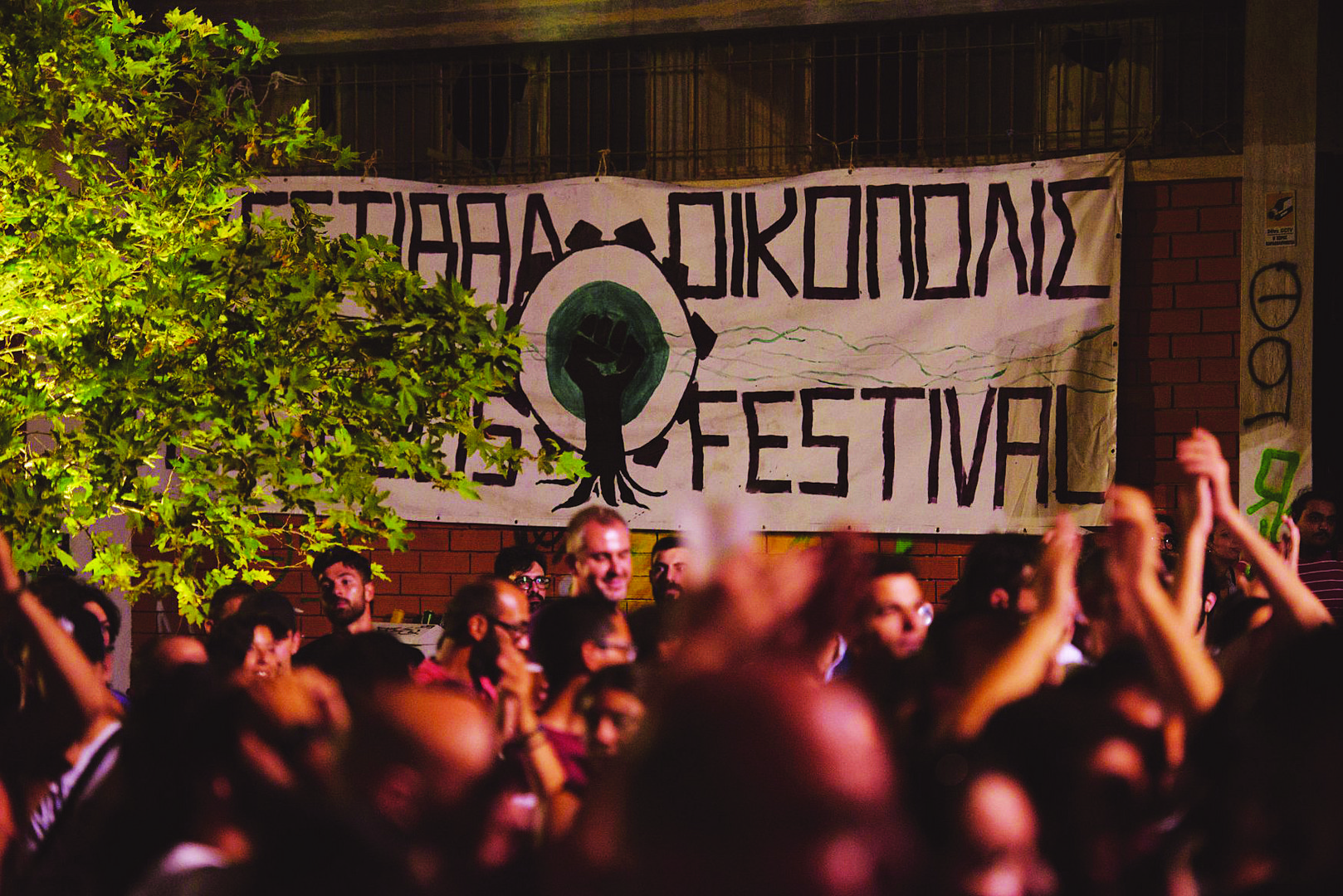
The Ecopolis team’s presentation and discussion regarding the obstacles and potential for urban conflicts in Nicosia will be kicking off the three-day anti-commercial festival which is set to take place next weekend, July 10-12, at the old municipal market square.
“The square itself, one of the few public squares left in Nicosia, is a main concern of Ecopolis,” said Charalambos Charalambous, another Ecopolis member.
The abandoned building of the old municipal market, which last July last year was restored to life after the municipality donated the space temporarily to those wanting to create a modern, alternative market, will once again change hands to be transformed into a state-of-the-art research centre, Rise.
“What impact will Rise have on the square and its accessibility to the public? How will the area, which now also hosts the new town hall and has several other projects in the pipeline, be affected?” Achniotis asked.
The sensitivity of the group to the changes occurring in the urban setting of Nicosia can be accounted for by their understanding of ecology and the environment.
“The ecological character of the festival goes beyond an understanding of simply the need to protect the natural environment,” Achniotis said. “From a social ecology perspective, we have a broad understanding of the ecosystem, in the sense that it also includes the urban setting and the people who inhabit it. It breaks the distinction of wildlife versus other forms of life, as if the two cannot coincide, and as if making the city a more natural space is something inappropriate.”
In this vein, the organisers view public space as part of our shared ecosystem that must be protected.
Take the cafes and bars taking up the public pavements with their tables and chairs as an example.
“A huge issue is that there’s a general arbitrariness in the situation with the tables and chairs of private businesses, and the municipality doesn’t seem to want to step in to contain the situation,” Achniotis said.
All it takes is a stroll around the old city to see what the Ecopolis team is saying. Cafes use public benches as private seating areas. Tables and chairs take over much of the pavements, forcing pedestrians to step into the road, which is especially unsafe for the disabled and parents with babies in pushchairs.
In some cases, the municipality appears to have tried to step in and forced some cafes or restaurants to create a pathway for pedestrians between the lengths of tables, but this just forces them to perform an uncomfortable catwalk between sets of tables.
The festival is a means rather than an end, Achniotis said.
“Beyond the objective of hosting a successful festival, it’s more of a tool to help environmental battles, by both bringing people together and by raising a number of issues for us to think about and work out ways to tackle them.”
These issues, they explain, revolve around urban struggles, as whatever happens in the city is a form of dispute since in each case you have conflicting private and public interests. The former will push for certain profitable uses of the city, while the former will usually desire a more ‘human’ or freely accessible use of an urban space, Achniotis said.
“We saw glimpses of these urban struggles in the fiasco with the old GSP stadium, where only through the first-ever municipal referendum could the public have its say,” Achniotis said.
In 2008, members of the public participated in the first ever municipal referendum – on the initiative of the then mayor Eleni Mavrou – to vote on how they would like to see the stadium developed and submit their own proposals. According to the results, residents said they wanted an open, green area with few buildings and easy access to pedestrians instead of cars.
“We also saw it with the struggle to keep cars off Eleftheria square, which once again was won through interventions by citizens’ groups at municipal council meetings and through online petitions and discussions,” Achniotis added.
With a number of projects already completed and others still in the pipeline for Nicosia, totalling €400m according to President Nicos Anastasiades, the Ecopolis group seeks to raise the question of who benefits.
“The issues that concern us are broad and have existed for a while, but they’ve become even more intense in Nicosia recently,” Charalambous said, noting that the fact that environmentalism has become a bigger part of public consciousness allowed the festival to step in and magnify the discussion.
“The festival’s aim is to take all these issues and talk about them, especially since they should also be of concern at the institutional level, but are not. What is actually needed is a broader participation of the city’s inhabitants in the decision-making processes,” Achniotis said.

