
By Agnieszka Rakoczy
This week saw yet another attempt – the third – by a parliamentary committee to resolve the feud between the Cyprus Symphonic Orchestra (CySO) Foundation’s board of directors and the unyielding and a united front of Cyprus Youth Symphonic Orchestra (CyYSO).
The youth orchestra wants to keep artistic director Yiorgos Kountouris. The board wants to replace him.
Young musicians, their parents and teachers, MPs from most parties, the auditor-general and representatives of the CySO foundation board gathered for the latest round last Thursday. The three-hour meeting of the House watchdog committee ended as two other committee meetings had done, in abject failure to achieve harmony through compromise.
During the discordant discussions, the foundation’s board cited its independence as a semi-governmental organisation, insisting it didn’t have to follow the committee’s direction.
MPs had been urging the board to refrain from making hasty decisions that might influence the youth orchestra’s future. They proposed setting aside the contentious issue of whether or not to replace the orchestra’s director until a new board is appointed at the beginning of next year. Youth orchestra members and their parents expressed grave concern that replacing Kountouris would prove a severe setback for an institution that today is regarded as one of the finest youth orchestras in Europe.
“Kountouris is one of the very few people in Cyprus who really does his job properly. Our kids love him and we parents love him too. It is a jewel in our culture and we don’t have too many such jewels in Cyprus. Everybody says he is doing a great job, even the board admits it so why do they want to get rid of him?” said Adamos Katsantonis, who heads the parents’ association protesting the board’s drive to dismiss Kountouris.
Nicos Ioannou, president of the musicians’ guild and teacher of double bass at the CyYSO music school, agrees.
“Kountouris has introduced a very high level educational standard at the school. Thanks to his efforts, our students go on to attend very good music academies all over the world.”
But the CySO foundation board of directors are standing firm.
“Kountouris’ contract expires this autumn and we have to advertise for his job. He has already worked as the CyYSO artistic director for six years, having his initial contract extended and this is a maximum that anybody has ever stayed in this position,” said the board chairperson, Egli Pantelaki, who is also the permanent secretary of the Minster of Education and Culture.
She is supported by board secretary, Stavros Kyriakides.
“He has already offered six years of his best to the orchestra and we have the right to see what else is out there. It is not healthy for the orchestra to be under the direction of the same conductor for so long a time,” he said. “Young people are like a sponge. They absorb everything so we want to give them various opportunities.”
While this explanation might sound reasonable, Kountouris and his supporters say the argument is superficial and distracts from the real reasons for the board’s determination to get rid of him.
Kountouris, the CyYSO’s 38-year-old artistic director, is open and frank about the dispute.
“The problems are nothing new,” he says, noting there has been friction between himself and the board for the last three or four years. The reason, he says, is simple.
“The board has been constantly interfering in the artistic work which actually is my responsibility. It is a non-executive board so its duty is only to make sure that the foundation budget and the state policy regarding culture are followed.”
He attributes the toxic impasse to a lack of proper regulations about how such boards should function, to the personal ambitions of certain board members, which he believes verges on conflict of interest, and to disagreements about budget matters and sponsorship. “In short, the way the existing board is structured doesn’t protect the foundation,” he asserts.
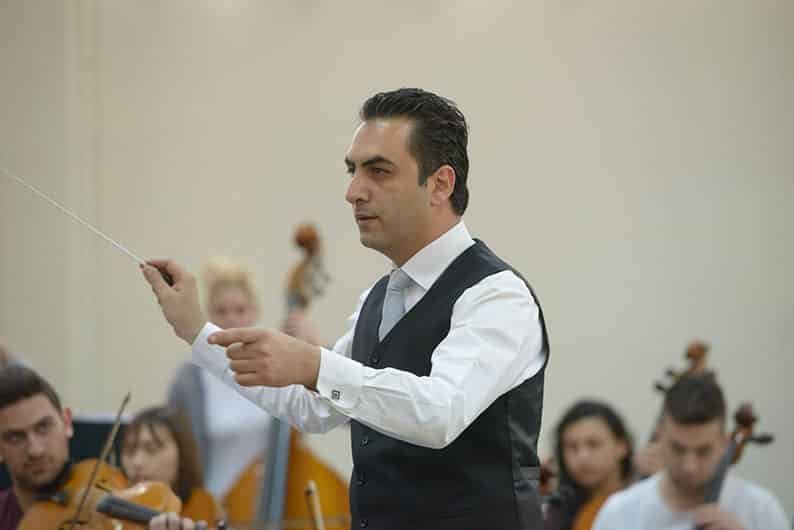
According to Kountouris, the board recently decided to redesign the way the school should be run, a new plan that has created confusion and generated resistance among students, their parents and teachers as well.
He said the board has decided the purpose of the music school is not to educate children but to help them join the youth orchestra and are disconnecting the role of the music school from the education cycle where students stay at the school after they’ve joined the orchestra.
“The board wants the children to be educated at this school just for a year, until they get into the orchestra, and then to go either to a state or private music school.”
Additionally, the board wants to decrease the number of students to 66 (originally designed for 99). Current enrolment is 83 because for the last two years the school has been instructed not to accept new pupils.
Junior ensembles have also been ordered to close while music camps have been reduced.
To put the scope of the changes into perspective and to underscore his reasons for so strongly opposing them, Kontouris refers the Sunday Mail back to when he took over the reins of the orchestra in 2013.
“At that time we didn’t have enough children in the orchestra to perform a proper concert. Every time we wanted to have one we had to borrow children from other youth orchestras abroad which meant on average one concert cost us about 100,000 euros. The reason why we developed the school was to avert this kind of situation. Now all members of the youth orchestra are from Cyprus and the cost of mounting a concert is 10,000 euros. Why would anybody want to change that?”
Board members Pantelaki and Kyriakides tell the Sunday Mail that their plan is 100 per cent justified by the financial constraints of the foundation. They point out that the foundation has had constant financial problems going back to 2013 because of the Cyprus banking crisis and the resultant decrease in the government funding.
“Since 2013 we have had to operate within a much smaller budget so both orchestras have suffered severe cuts,” explains Pantelaki, claiming that much of the disagreement stems from Kountouris’ overly ambitious aspirations for the school.
“The problem is the artistic director has his own perception of what the music school should be and wants a big school. And the school has been actually getting more money than the youth orchestra itself.”
She said that with an orchestra numbering 66 members it doesn’t make sense for the school to have 100.
“What are the chances that these extra people will ever get to play in the youth orchestra?”
Not surprisingly, Kountouris rejects the financial argument. He maintains that instead of decreasing expenditures the board should have been looking more actively for sponsorship, something the government’s original plan for the foundation envisaged. Then the idea was a gradual reduction in state funding as the foundation found ways to become increasingly self-sustaining.
“The board should have just informed me how much money we have and we would work with it,” he insists.
If money and funding are the immediate issues, Kountouris also wonders why the board has not looked to other ways of making savings that would not impinge on the educational role.
One example, he suggests, would be to stop printing the foundation magazine Overture. That alone would free up 20,000 euros a year (and the publication could remain on line).
The real issue, Kountouris believes, has to do with the board’s make-up given it has three more or less permanent members drawn from the education and culture ministry plus two others who represent the interests of the state music schools. In short, more than 50 per cent of the board comes from the public sector, with interests perhaps influenced by functions and role in their non-board capacities.
It doesn’t help, he argues, that allegedly some private music schools have also been clamouring for closure of the CyYSO music school on grounds that it “steals students from them”.
All in all, it makes for a questionable recipe for conflict of interest, or so Kountouris maintains.
He is not alone in questioning the board’s decisions and structure.
Professor Marinos Pourgouris of the University of Cyprus, a member of the board between 2012 and 2016, resigned after challenging a number of board decisions.
“Generally, I don’t think there is an infrastructure or political culture to ensure that the orchestras are protected and that the best possible results are always achieved for them,” he said, adding that neither the artistic directors nor representatives of the musicians have the right to sit in on the board’s meetings.
“The question that arises is what is the purpose of the board: is it there to serve the orchestras or to control them?”
Diko leader Nicolas Papadopoulos is another caught up in the drama surrounding the CyYSO music school, as a parent because his 10-year-old daughter is one of its students.
“Because of this I got a chance to personally witness what wonderful work they do with all the children,” he tells the Sunday Mail. “It is a real shame that an institution that produces such great work faces such problems with the management. It is really incomprehensible to me why there is so much bad faith between the board and people they are supposed to provide service to.”
Papadopouos doesn’t mince words when sharing his view of the conflict between the board and parents supporting Kountouris in his fight to maintain the CyYSO music school in its current form.
The board is to blame, he says. “We tried to help them and work around the problems. We suggested specific ways they could proceed to calm things down. But in my 15-year long experience as an MP I have never ever seen such bad faith and such a bad climate in a board of a semi-governmental organisation that is supposed to be helping children. I have seen boards making mistakes or being negligent. I have seen cases of fraud. But I have never seen a board actively trying to destroy something they should be protecting.”
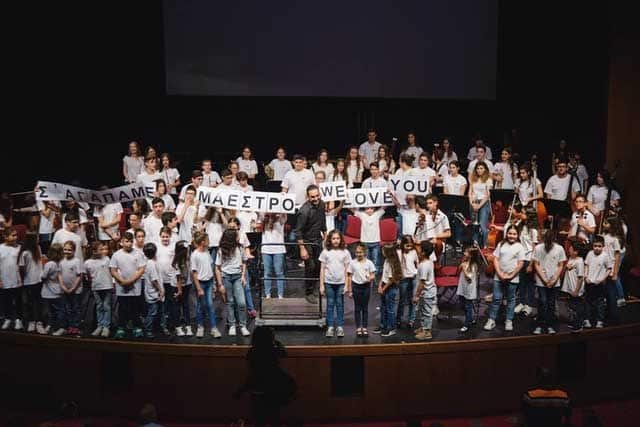
Pantelaki and Kyriakides insist however this is not the case.
“The board have always been working with the best interest of both orchestras in heart and will keep on working with the same objective in mind during our remaining time in the office,” says Kyriakides.
The CyYSO and the CySO go back almost three decades when they were first launched (and funded) as the State Youth Orchestra and the State Chamber Orchestra.
The non-profit Cyprus Symphony Orchestra Foundation, has been responsible for administering and overseeing the state-funded orchestras plus the youth orchestra music school since 2007.
The foundation is managed by a nine-member board of directors. Members are nominated by the Council of Ministers and appointed by the president for a six-year term, which can be, and often is, renewed.
At all times, the Ministry of Education and Culture is represented by three senior officials.
The young musicians entering the youth orchestra are selected through auditions: 81 per cent come from the CyYSO music school, 8 per cent from state music schools and 11 per cent from private music schools.
The state covers 75 per cent of the tuition fees at the CyYSO music school, with parents responsible for the other 25 per cent.
The school enjoys a special place in the musical landscape of Cyprus and this is reflected in the annual enrolment period when there are as many as 50 applicants for each placement.

