
Media, politicians and the education system have consistently undermined grassroots peace-building efforts
By Marina Christofides
It goes without saying that for any political solution to the Cyprus problem to last, it would require the public’s cooperation and commitment. Assuming we even get to an agreement, reunification won’t work unless mutual trust exists to enable people to overcome the inevitable misunderstandings and sensitivities that are bound to arise.
What, if anything, has been done In the last two decades at grassroots level to prepare the people for the peace and reunification that we officially say we want, and how effective has it been?
“Quite a lot,” says Dr Maria Hadjipavlou, former professor of Social and Political Sciences at the University of Cyprus, who has been involved in conflict resolution work since it was first introduced on the island.
Activities such as conflict resolution, problem-solving and communication workshops, bicommunal projects, meetings, contacts, and visits began in the mid 1980s, peaked in the late ‘90s, but ironically lost momentum when the checkpoints opened in 2003, just when contact became easier and the process should have taken off.
It turns out that how successful the efforts of civil society were, depended to a great extent on the official stand taken towards a solution at various points in time.
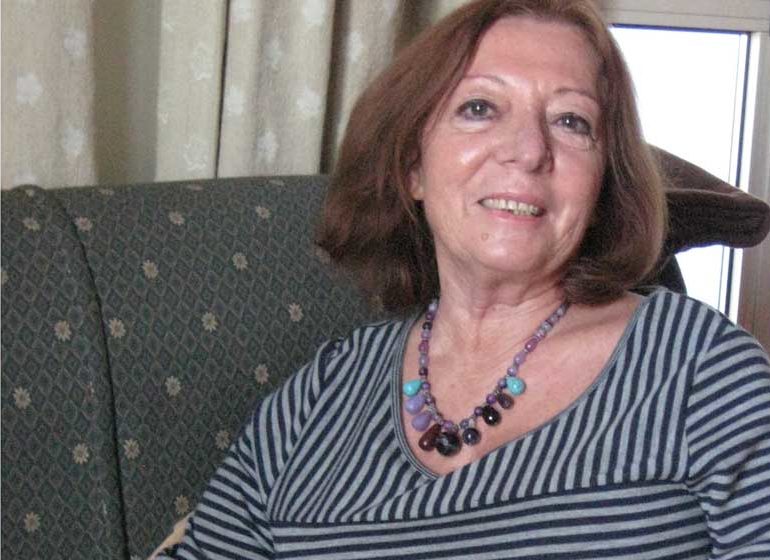
“Peace-building activities,” she says, “seem to be connected to whatever was happening in the peace process at the official political level.”
For example, on the Greek Cypriot side, such activities were more effective before 2003 when the official policy of successive governments was ostensibly in favour of reunification. But when rejectionist Tasos Papadopoulos came to power and was faced with the opening of the checkpoints and the possibility of the Annan plan, conflict resolution activities became increasingly difficult, as they were criticised for being elitist and academic, accused of being guided by foreign interests, and therefore treacherous and naïve.
On the Turkish Cypriot side, the opposite happened. At first Rauf Denktash allowed bicommunal activities to take place on a very limited level across the Green Line before stopping them altogether. Only when the external political scene changed, with Greek-Turkish rapprochement, a change of government in Turkey under the leadership of Erdogan who was keen to start EU accession negotiations, did things change for the better for the Turkish Cypriots, allowing them to take to the streets en masse in an unprecedented turn against Denktash and marginalising him.
The very first systematic conflict resolution group started in 1985 at the initiative of Professor Leonard Doob just at a time when UN Secretary-General Javier Perez de Cuellar was close to getting consent from both sides for his comprehensive peace plan.
The second was a series of workshops of bicommunal peace activists facilitated by Louise Diamond, a conflict resolution specialist from the Institute for Multi-Track Diplomacy in the US in the ‘90s when again the two sides came close to agreeing with UN Secretary-General Boutros Boutros Ghali’s ‘set of ideas’ and ‘confidence-building measures’.
Activities then mushroomed, facilitated by various foreign academic experts such as Fulbright scholar Benjamin Broome, who offered training and workshops using a new methodology called interactive management. Nearly 300 individuals signed up and became involved in twelve Cypriot-led bicommunal projects.
Another Fulbright scholar, Marco Turk, offered a series of mediation training programmes using the ‘humanistic approach’ starting in 1997, until Turkish Cypriot authorities closed the checkpoints and blocked all bicommunal activities in 1999.
One of the most inspiring projects that emerged in 1995 was an initiative called the Youth Encounters for Peace, which brought together hundreds of young people. It was later followed by The Seeds of Peace group which is still active to this day and brings together Cypriot youth in the US for a summer camp. A highlight of the camp activities is a “walk through history” in which important dates in Cypriot history were marked, bringing up contentious issues, which gradually led the youth beyond recriminations and towards mutual understanding.
Youth projects continue to be a source of dialogue and rapprochement, with other initiatives being added such as Playing for Peace, which uses the game of basketball to foster relationships, and the Cyprus Friendship Programme, which last year received over 200 applications, thanks to support from the government for the first time. However, Hadjipavlou acknowledges that more work needs to be done with the youth who on the Greek Cypriot side are the rejectionists.
“While a lot of work has been done, it has gone unreported in the media,” Hadjipavlou says.
In fact the media, which in the south is in the hands of a small group of rejectionist journalists, has engaged in demonising and discrediting bicommunal efforts and prevented the peace activists from reaching wider audiences and taking the debate to the people. Propaganda has permeated the whole society, driving the way people think and act. Not only have the media and most politicians used their power to spread misinformation, but the education system in the south has also actively contributed to the conflict, as has the church, which has not shown tolerance or reconciliation.
Peace-building work met with greater success in the north. There the training of key figures, who went on television after each major training event to broadcast to the public what they learned, enabled Turkish Cypriots to hear about experiences of people they trusted and was instrumental in building a base of new ideas in their society. A turning point came when the people saw the effectiveness of pro-settlement rallies, which enabled them to express their desire for something different.
It is estimated that overall Turkish Cypriot peace activists reached 100,000 people, roughly equivalent to the 65 per cent who voted ‘yes’ in the 2004 referendum. On the other hand in the south, the system was bigger and less concentrated. Here civil society remains very fragile, with the NGOs that do exist usually attached to a political party, with few resources and an inability to mobilise.
One of the most powerful and fundamental lessons participants drew from peace-building activities was that “the feeling of being Cypriots in these workshops is what binds people.” This feeling of solidarity helped foster other positive outcomes: establishing good friendships, learning each other’s language, Greek Cypriots realising Turkish Cypriots are like them, learning how to be unbiased and break social and political taboos, practising how to put oneself in the other’s shoes without fighting and developing different and evolving views about peace and the Cyprus conflict.
Research has shown that great benefits are to be had from contact with the ‘other’, the perceived enemy, in reducing prejudice. Yet a substantial percentage of Cypriots from both communities have not crossed for a number of reasons, such as not wanting to show their passport or ID, fear, nationalism, or because it is not viewed as politically correct as long as the north is occupied by Turkey.
As a result Greek Cypriot politicians and the public do not know much about life in the north, the politics, or the difficulties they face. Had there been efforts to honestly evaluate and present accurate information about what was happening there to the Greek Cypriot community, then perhaps greater understanding might have occurred.
“Sadly,” Hadjipavlou says, “the opening of the checkpoints was not utilised politically to bring people together.”
When the process becomes confined within a single community, she explains, there is always the danger of falling in the trap of zero-sum rather than a ‘win-win’ that would push the process towards a mutually accepted arrangement internalised and actively supported by a good majority of both communities.
“Unfortunately the split of society into ‘us’ and ‘them’ prevailed, with a zero-sum approach being adopted leading to the deepening of partition and mistrust,” she says.
So what more needs to be done from now on? Hadjipavlou emphasises that civil society on both sides needs to be empowered to influence, pressure and encourage the leaders.
“Unless the leaders and political parties understand their own responsibility and legitimise civil society’s activities, whatever we do at grassroots level will be limited,” she says.
Cross-community activities will need to have more of an impact so as not to create the zero-sum campaigns once again. The media need to be encouraged to be more objective and paint less politically distorted pictures. Education needs to be de-politicised and transformed into a mechanism of conflict resolution and reconciliation through critical thinking and mutual understanding.
“Above all,” she says, “there is a need to build the joint mentality that the Cyprus conflict is a shared problem to be solved cooperatively and that there exists an inter-dependent relationship between the two communities.”
Marina Christofides is the author of The Traitors’ Club, a memoir on the Cyprus problem, and the award-winning illustrated history of Cyprus, The Island Everyone Wanted. Both books are available online from her website www.marinachristofides.com and main bookshops islandwide

