
With her fifth book about to come out one English Cypriot writer has turned international attention to the history of Cyprus. THEO PANAYIDES meets her
It’s New Year’s Eve and I find Eve Makis in the Sun Hall Hotel in Larnaca, tapping at her laptop. I’m a few minutes late, admittedly, but I’m still a bit surprised to find her hard at work, on New Year’s Eve no less. Still, there she is, not exactly writing – her new book (her fifth) is almost done, due to be dispatched to her agent at the end of this month – but editing, polishing, taking advantage of every spare moment. “Yeah,” she confirms, “I can write anywhere. Because I’ve got two children, so I’ve had to get used to writing with noise around me, and to sort of grab any moments I can”.
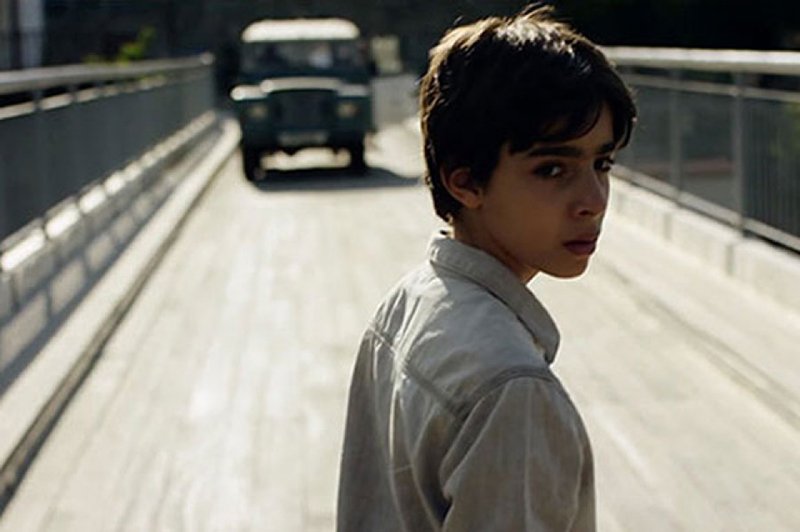
Eve lives in England – in a suburb of Nottingham, where she was born – but her profile in Cyprus has seldom been higher. Her fourth novel, The Spice Box Letters, has just come out in a Greek translation, while a feature film called Boy on the Bridge (adapted from her third novel, Land of the Golden Apple) is set to premiere later this year. Spice Box Letters tells a tale of the Armenian community in Cyprus, Land of the Golden Apple was inspired by the childhood experiences of her husband Tasos in the village of Trikomo. “The underpinning of every book has been Cypriot history,” she explains – but her biggest hit was perhaps her debut, Eat, Drink and Be Married, with a teenage heroine whose life revolved around a Nottingham chip shop run by her Cypriot parents, much like Eve herself.
We’ll get to that in a moment; but first, let’s take some photos. This turns out to be complicated. We venture outside but the light’s too bright, it hurts her eyes (she lived in Cyprus for about four years “in my 20s” – she’s now “in my 40s” – but nowadays only visits a couple of times a year). I snap away in the lobby, but the results leave something to be desired. Let’s take another one, she pleads, studying her image unhappily. Maybe if she smiled a bit more, I suggest – and she tries but it doesn’t come naturally, at least in a photo. She’s uneasy, whether with the set-up or publicity in general; I suspect she’s a natural introvert. Later on, she admits that she never does promotional tours for her books, though she knows she should; she’ll do a few signings in Nottingham, but “it’s not the bit [of the job] that I enjoy”. Nor is she actively a part of the UK Cypriot community (“I’m probably the worst Cypriot around”), nor indeed of any community. “I don’t do the group thing, I’m an outsider. I’m an outsider wherever I am – and I think that’s the best place to be for a writer. I’m outside looking in, and that’s where I want to be”.
As a writer, i.e. a writer of novels – not a journalist, which she did for seven years but never felt was “a natural fit with me” – she’s led something of a charmed life. Eat, Drink and Be Married was published by the very first publisher she approached, and Eve was taken on as a client by the very first agent who read the manuscript; that never happens, especially in today’s cutthroat book market. “I was very, very lucky,” she concedes; she talks easily, candidly (she’s not spiky, despite that early uneasiness), her sole verbal tic being the occasional ‘sort of’. The timing was right: Eat, Drink came out soon after My Big Fat Greek Wedding (though she’d signed her book deal before that film) and was also, at the time, the first representation “from the inside” of the Greek Cypriot community in England. “But the book took four years to write,” she points out. “So you can see it as being luck, or you can see it as your life sort of leading up to that. And a lot of hard work, and a lot of years when I wasn’t earning anything”.
 Her whole life had indeed been leading up to that book – especially her childhood and teenage years in a very particular sub-culture: Eve was the only Greek Cypriot girl of her generation in Nottingham to leave home and go to university, and “my parents ideally would not have wanted me to get an education, but to get married”. Eat, Drink “began as a very, sort of, angry representation of the life that I had lived – which was a repressive life”. She started writing it when her daughter was born (the daughter is now 18, a gifted singer studying Commercial Music), motherhood having perhaps spurred her on to make sense of her own upbringing – but something strange happened in the writing process. The book began angry, “but when it was angry, it didn’t work”; only when she distanced herself did it start to work, when she added perspective and turned it into a kind of rueful satire. “Because actually, the repression wasn’t terrible. I wasn’t beaten, I had a happy childhood – it’s just that I couldn’t have a boyfriend, I couldn’t go to parties. Y’know, I couldn’t wear Doc Martens…”
It’s an interesting point, that ‘angry’ didn’t really agree with her. She must’ve been angry at some point in her life, or at least sufficiently strong-willed to insist on an education (she did a Combined Arts degree with an emphasis on Psychology), and she talks of Eat, Drink and Be Married as having “exorcised [the] demon” of her adolescence – yet a rave review in the Daily Express, quoted on her website (eve-makis.com), calls the book “an easy-to-digest and highly enjoyable read”, which doesn’t really sound like an exorcism. I suspect it takes a certain kind of person to write an angry book – a bitter, blustery, self-centred person – and she’s not that kind of person. She comes across as earnest, empathetic, maybe rather anxious. Asked to describe herself, she goes for “liberal” and “easy-going”. Does she still get angry nowadays?
“I channel my anger into my work.”
Does she have a cool head? Is she good in a crisis?
She hesitates: “It depends on the crisis”.
Something small. Like for instance, if she saw a cockroach?
“Oh no, I’m not good,” she replies with a shudder. “Not good at all, no. I would sort of panic. Yeah, majorly panic. I’d majorly panic about a cockroach.”
Another good word to describe her might be ‘grounded’ – which perhaps is another way of saying that you can take the girl out of the Nottingham Cypriot household but not vice versa. Needless to say, Eve has raised her own kids (she also has a nine-year-old son) very differently than her parents raised her: “They don’t know what suppression is,” she chuckles. On the other hand, her devotion to those kids – writing is all very well, but “my kids come first, and time with my kids comes first” – is pretty old-school, and of course the man she married must’ve met with her parents’ approval, being “Cypriot Cypriot,” i.e. not UK-born, “fully Cypriot”. She pauses: “Very Cypriot! In some senses. In terms of his temperament, not in terms of his values”. Her husband works in football (he’s a former player and scout) and it’s fair to say they don’t often talk about books, even her own books – which is perfectly fine. “I don’t think I’d like my husband to be involved in my work. It’s my thing, you know. I just want to get on with it.”
There it is in a nutshell: the grounded-ness, the total lack of preciousness, Eve’s view of writing as a job one simply ‘gets on with’. That’s why she writes whenever she can, even in spare moments between ferrying kids and doing housework (she doesn’t have a maid, or other domestic help: “I’m a writer, I don’t earn that sort of money!”), without claiming to be special or pretending that the rules don’t apply to her. The word she uses is “professionalism”, meaning you buckle down and do what needs to be done.
“I think, if you take the professional approach to writing, you have to be habitual in your writing process… You know, like someone gets up and goes to work, you get up and go to your desk,” she instructs firmly (it’s no surprise that, as well as writing her own books, she also teaches a writing course at Nottingham University). “I mean, I think a lot of people aspire to write books, and a lot of people are capable of writing books – but if they don’t put the time in, and they don’t establish the writing habit, it never happens. And they wonder why it never happens: it never happens because they’re waiting for inspiration to strike, and that’s not how writing takes place!”.
Professionalism means having the work in mind all the time: “You get up, you’re brushing your teeth, you’re thinking ‘What am I going to do when I sit down [to work]?’. You walk the dog, you’re thinking ‘Where am I taking this, where is it going?’.” Professionalism means rising above your own ego and desire for validation, especially when it comes to working relationships: “For example, I would never hassle my agent, I would never keep sending her stuff to read. I know that’s not done”. The new book goes out this month, and Eve is worried that her agent might not like it – all she’s seen so far is a synopsis and an opening chapter – but if she comes back asking for changes, then Eve will do her best to accommodate those changes. “A book is a product,” she explains flatly, “and it has to appeal to a market”. It’s no good being precious about these things. Professionalism means looking at the work realistically. Boy on the Bridge, the upcoming movie, is nothing like her book – but that’s okay, because she and the rest of the team (Eve co-wrote the script) made a decision to go in another direction. The book is about a boy being preyed-on by a paedophile; in the film, that plot has disappeared completely, doubtless to make it more commercial. “You can sit there and think ‘Oh, this is my creation and I’m not changing it’, and that’s fine,” she notes as a general principle. “But then you have to be prepared not to sell.”
That doesn’t mean being sloppy, of course. I suspect she’s a bit of a perfectionist (judging by how long it took us to get a photo) and the books don’t come easily, taking between two and four years to write. “There’s times when you don’t want to do it, there’s times when you fall asleep at your desk, there’s times when it doesn’t flow,” she laments – but Eve Makis also comes across as a down-to-earth woman who’s devoted her life to this mad vocation, using it not just to channel her feelings and exorcise demons but also as a kind of patriotic gesture, introducing Cypriot history to a UK audience. (“Eve, I didn’t know any of this,” marvelled her editor after reading her first book. “I didn’t know the island was divided”.) You go into a chip shop in England, she notes, “and there’s Cypriots behind the counter, and you have no idea what they’ve gone through… All you see is a person with a little moustache frying your fish”. Part of her mission is to restore the dignity of these unknown fish-fryers, including her now-retired dad – though these days it’s just as likely to be Syrians in a kebab shop, often reviled in the post-Brexit England she finds so alarming.
The work is everything, or almost everything. “I’m a robot,” chuckles Eve Makis. “I am. I’ve become that way.” Does she have any hobbies? Not really: “I swim, three times a week. I have no other hobbies, because I don’t have time. I read and I swim, and I write. And I look after my kids”. She reads a lot – though not in the past three months, she’s been too caught up in her own writing – mostly literary novels; her favourite book may be Jeffrey Eugenides’ Middlesex. She knows her own work isn’t quite in that league, at least not yet. “I think my books are essentially small books with a big heart,” she admits with disarming honesty. “I see the flaws in every book I’ve written. I don’t display them on my bookshelf, I don’t, sort of, bandy them about. There’s flaws in every book I’ve written”. Professionalism means seeing the flaws in your work, and trying to get better.
What if she hadn’t been ‘lucky’? What if she hadn’t been picked up by the very first people who read her manuscript? What if she’d tried and tried to get published – as most writers do, unless they self-publish – and still not succeeded? Would she have kept writing anyway, in the shadows and crevices of daily life? I recall what she said about being “an outsider” (a common problem for second-generation immigrants) and realise that writing is a kind of home for her, a place to belong. “I think I need to write,” she confirms. “Writing isn’t a thing I do because I have to. I need to write. It keeps me sane”. My mind flashes idly to a kind of sitcom family house in suburban Nottingham, husband watching football on the telly – and Eve serenely tapping at her laptop, as dogs bark and kids bicker around her.

