
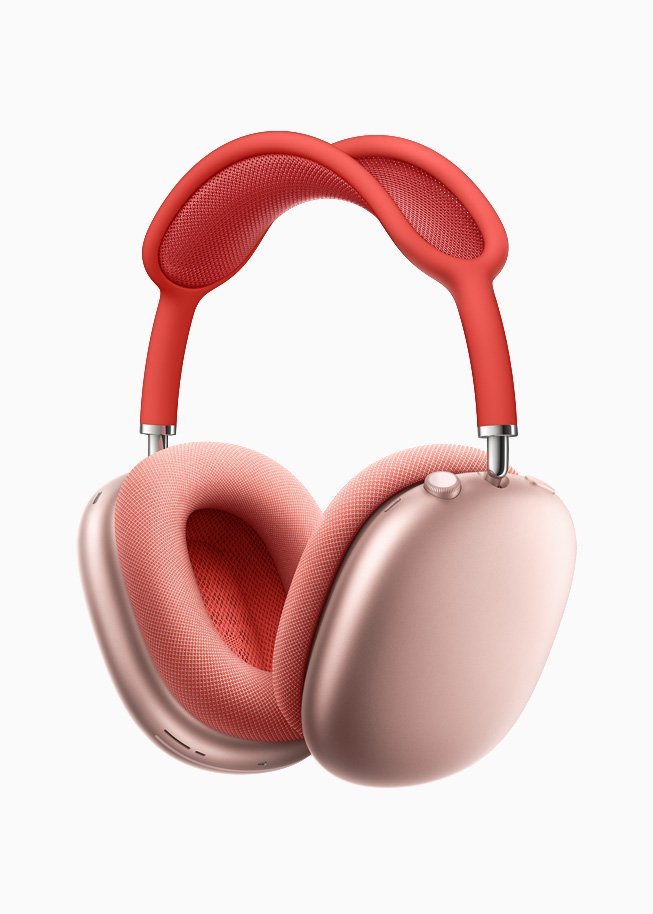
Apple bolstered its accessory range earlier this week through the introduction of a new pair of headphones called the AirPods Max, priced at €600 in Europe.
That is an astonishingly high amount for any manufacturer to ask for a pair of headphones, although Apple certainly has history in this regard. Since the introduction of the original iPhone, the American technology company has become one of the most adept companies in the world at selling high-priced electronics to a more than eager customer base at a frankly absurd pace, with iPhone owners routinely switching to the newer version of the device at a more rapid pace than owners of similar smartphones from rival manufacturers.
With Apple’s new over-the-ear headphones, also known as circumaural headphones since they fully enclose the ear instead of just resting on it, costing more than the original iPhone, meaning that an accessory now costs more than many smartphones on the market, let’s try to inspect whether this price makes any sense in context, both in terms of the quality packed in the headphones, as well as in terms of what they are competing with.
Shape and Design
Apple makes some bold claims about its new headphones, particularly in terms of how they fit on the user, saying that they will be comfortable for “for a wide variety of head shapes and sizes”. While I do not doubt that they will be perfectly fine for most people, my own experience with headphones makes me a little dubious as to the universality claimed here.
Aesthetics-wise, the cups look quite neat and I can see the Apple Watch inspiration, especially on the repurposing of the Digital Crown. The headband, however, is much less pleasing to look at, although I can appreciate that it’s a case of function over form.
Inside the cups, Apple mentions a ‘unique dual neodymium ring magnet’ which is a tad misleading. The design may be unique and custom-built for this particular set of headphones, but neodymium ring magnets have been in use since the 1980s, after being discovered by Masato Sagawa of Sumitomo Special Metals in Japan.
All you need to know is that neodymium ring magnets allow for lighter headphones, have significantly better performance in terms of sound clarity compared to headphones using different magnets, and enable headphones to produce higher sonic sensitivity and a higher sonic output while using less power.
 Features
The AirPods Max utilise Adaptive EQ (adaptive equaliser), a feature which has already been present in their smaller in-ear AirPods. Headphones which adapt their sound projection are a fairly recent thing, with Australian companies Audeara and Nura putting out ‘headphones that match the ears that are listening to them’ back in 2018.
Of course, adaptive audio technologies have become much more refined since then, particularly with Apple AirPods’ active noise cancellation feature forcing Qualcomm to raise their game and put out their own adaptive noise-cancelling feature earlier this year. This is important for the proliferation of adaptive sonic output and noise cancellation as Qualcomm already works with Jabra, Sennheiser, Bang & Olufsen, Audio Technica, and other manufacturers. The AirPods Max will also have this feature, with Apple explaining how the headphones will utilise three outward-facing microphones to pick up on external noise and adjust accordingly.
The AirPods Max will also have what Apple calls ‘transparency mode’, which will allow listeners to hear environmental noise at the same time they’re listening to their music. This is, of course, incredibly useful, but not something we haven’t seen before. Sony’s MDR-1000X headphones, for example, allow the user to select how much environmental noise they want to let through, while Bose’s equivalent Variable Noise-Canceling feature, QuietControl 30, also allows listeners to fine-tune this particular setting to their liking.
Apple also mentions ‘spatial audio’, Apple’s version of Sony’s 360 Reality Audio and 3D audio or Dolby’s Atmos feature, which has already been in use in Apple’s AirPods Pro headphones. Again, a welcome feature, but I suspect most listeners won’t be able to use its full potential while on the go. Will make a difference during film viewing, however.
Ecosystem limitations
If you’re an Android or Windows device user and feeling tempted by these headphones you are somewhat out of luck. The Airpods Max can be paired with an Android device, but the vast majority of their features can only work with Apple devices.
Not only that, but they can only be charged with an Apple Lightning cable, not a USB-C. Also, they do not have a traditional 3.5mm jack so they cannot be used when the battery has run out. All of this is deliberate, of course, with Apple wanting to enclose consumers in its own ecosystem.
That being said, this does come with certain benefits for Apple devotees. The AirPods Max come with a wonderfully handy feature which allows users to seamlessly switch between devices depending on their need. For example, when listening to music played from a MacBook, the headphones can detect your phone ringing and will switch to your iPhone as an audio source should you wish to answer the call.
How do they compare with rivals?
Back to the main sticking point regarding the price. The main players in the high-end noise-cancelling market, Sony and Bose, offer a wide range of options.
Bose’s top-of-the-range Noise Cancelling Headphones 700 are a full $200 cheaper at the time of writing. Battery life is identical between the two pairs, with both Apple and Bose offering 20 hours of battery life per charge.
Sony’s offerings meanwhile have a bit more variation, with their noise-cancelling wireless headphone range starting as low as $90 and going as high as $350 with their WH-1000XM3 Wireless Noise-Canceling Headphones. Even at full price (found these discounted by up to $100 online), these headphones are $200 cheaper than the AirPod Max headphones, just like the Bose headphones.
I’ve had mid-range wireless noise-cancelling Sony headphones before and have very positive experiences with the brand so I may be a little biased here. However, the kicker for me is the battery life. The WH-1000XM3 headphones have a 30-hour battery life, a full 50 per cent more than either the Apple or Bose headphones.
Conclusion
A definitive verdict on any electronic consumer product cannot be provided before one gets the opportunity to try it. With that being said, I would be extremely surprised if the new AirPods Max aren’t an impressive bit of kit, particularly when factoring in the comforts their features will provide to strictly Apple product users.
At the end of the day it will boil down to wanting them enough to feel comfortable with parting with €600 for them. If money is no issue and you are firmly entrenched in the Apple ecosystem, these will more than likely make you extremely happy.

