
‘Tis the season to make tough choices. Cypriot adults increasingly have to decide whether to stick with local tradition and dole out presents on New Year’s Day – or to succumb a week earlier on Christmas Day.
If in doubt, seek your children’s advice – although it will come with a heavy price tag. Give them to us on both days they will insist. Problem solved. Santa Claus, Saint Nicholas or Ayios Vassilis (Saint Basil)? Children love them all – provided they come bearing loot.
This blurring and merging of gift-giving traditions – the Cypriot and the British/American – have meant Cypriot children are probably the luckiest in the world. The result is a hotchpotch, with gift giving spread out over two different days, and sometimes even twice.
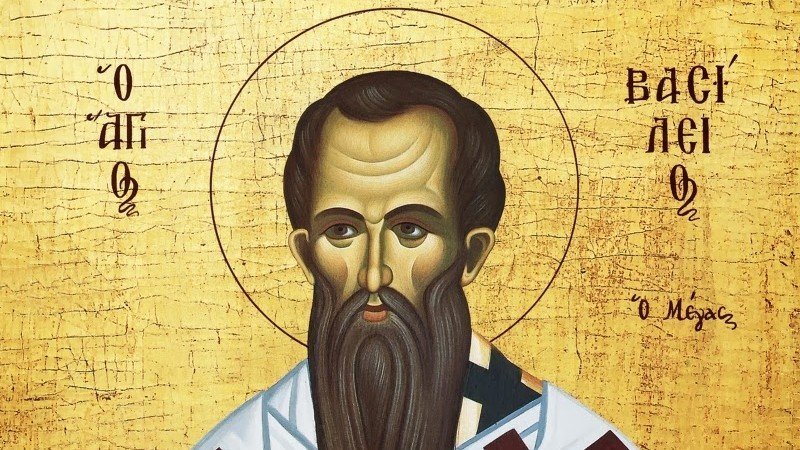
Some families still follow the Greek Orthodox tradition of exchanging gifts on Ayios Vassilis Day on January 1 along with the New Year’s ‘vasilopita’ with its coin inside.
“We exchange gifts on January 1 because we are Christians. We celebrate Ayios Vassilis of Caesarea, who gave presents to poor children on the day,” said 49-year-old Agathe Papadopoulou.
Mother of two, 36-year-old Nandia Ioannou, a permanent resident of Cyprus with Greek parents said her family always used to exchange gifts on the first day of the year. She maintains that tradition with her Cypriot husband and two young children.
Not so Panayiota Kyriakou, also a mother of two.
“Ayios Vassilis comes early in our house. We always exchange presents on December 25,” she said.
Seventy-two-year-old Athina Kodjiapashi is a perfect example of how things have changed.
“When I was growing up with my five siblings, we were waiting for Ayios Vassilis to come during the night of December 31, and we opened the presents on the morning of January 1,” she said.
However, when she thought about her current habits, she realised they have changed quite a lot from when she was younger. She told Sunday Mail that nowadays people exchange gifts whenever they happen to see their friends or relatives.
“I remember my husband used to dress as Santa Claus and come at the house to bring the presents over the holidays, but it didn’t matter when he come, not for my two boys at least!” she said.
It is clear Kodjapashi was not referring to Ayios Vassilis, but the figure of Western Christian culture, the plump white-bearded man dressed in red who climbs down the chimney on Christmas Eve to leave the presents under the Christmas tree.
So how did Cypriots come to celebrate Santa Claus then? Is the answer as simple as ‘globalisation’? The answer is ‘yes’ and ‘no’, and as usual the Brits are to blame (or thank if you are a child).
The first inklings of change happened during British rule.
Tabitha Morgan, in her book “Sweet and bitter island, a history of the British in Cyprus” published a picture of Geoff Chapman, a British forestry department inspector in the late 1930s dressed as Father Christmas ready to march down Vyronos street in Nicosia, riding a camel. Accompanying him was a Scottish man dressed in a traditional kilt and holding a bagpipe.
“To celebrate ‘normal British Christmas,’ despite the fact they lived in a foreign country, was of great importance to many British families,” writes Morgan.
The introduction of Father Christmas by the British brought great confusion to Greek Cypriots, according to film director Adonis Florides who has studied the Cypriot tradition for his own interest.
“In Cyprus we did not use to celebrate on December 25. Christmas as we celebrate it today is clearly imported. It began under the British rule,” he said.
“Father Christmas took the form we know today in England during the Victorian era and he is not exactly a saint but the personification of Christmas. He became known as Santa Claus in America and was widely circulated through Coca-Cola Christmas ads. In other countries where Saint Nicholas traditionally existed, the two figures were identified,” he said.
According to Florides, not even the church celebrated Christmas day in any special way when contrasted with Easter. That is, until the English way of celebrating Christmas was introduced in Cyprus.
“Cypriots started following English/European traditions like the decoration of a Christmas tree and they identified St Basil who is celebrated on New Year’s Day with Father Christmas who celebrates at Christmas.”
The Limassol-based director admitted that as a child, he remembers asking for presents both at Christmas and at New Years.
Cypriot historian Marios Epaminontas, 46, said that even the gift-giving on January 1 is an adaptation of an earlier tradition.
“Over 100 or 200 years ago, people used to exchange a gold coin on the first day of the year, and nothing more” he said.
As if to cement the changes, he says his seven-year-old daughter demands her presents on Christmas.
Of course, there are still some people who maintain the Greek tradition like the family of 23-year-old Milto Elia in Larnaca. According to Elia, her three younger siblings, parents and grandparents from her mother’s side all exchange presents on the morning of January 1.
“However, my dad’s parents exchange gifts on Christmas day,” she said.
It’s a mix that sits very well with the young

